
Executive Summary
The bulletin "Accounts Under the Microscope," prepared by the "Safe Voice" program of the Kadn Center for Justice and Human Rights, presents the outcome of monitoring and documentation of thirty active accounts on social media platforms (TikTok, Facebook, X/Twitter) that publish content containing multiple patterns of hate speech.
Key Findings:
Discourse Patterns: The documented content is characterized by violent generalizations, dehumanization, and explicit or implicit calls for violence and expulsion, in addition to invoking historical narratives to justify revenge and exclusion.
Targeted Groups: The discourse primarily revolved around tribal/ethnic groups and political/ideological categories.
Mechanisms of Spread: Accounts rely on reshare networks, intensifying activity during political or field events, along with employing hashtags to increase reach and impact.
Risks: This discourse raises the likelihood of field escalation, attacks, and displacement waves, posing a direct threat to social peace and civil coexistence.
Key Recommendations:
Continue periodic monitoring and documentation to track trends and observe transformations.
Effectively report to platforms accounts and posts that contain incitement to violence or discrimination.
Legal advocacy by activating partnerships with lawyers and human rights organizations to hold involved parties accountable.
Launch counter-messaging campaigns to promote coexistence discourse and refute misleading claims.
Coordinate with civil society and official bodies to reduce the risks of escalation, especially in fragile areas.
Balance freedom of expression and responsibility to ensure a safe digital space that does not turn into a platform for incitement to hatred and violence.
Introduction
The bulletin "Accounts Under the Microscope" comes within the monitoring and documentation activities carried out by the "Safe Voice" program of the Kadn Center for Justice and Human Rights, as part of its ongoing efforts to promote a culture of human rights and counter hate speech in the digital space.
This publication aims to highlight thirty active accounts on social media platforms (TikTok, Facebook, X/Twitter) that have been observed publishing different patterns of hate speech, including race-based speech, political opinion-based speech, and inciteful and dangerous speech. This work relies on a precise documentation methodology that includes collecting public data, content analysis, and classifying linguistic and discursive patterns to provide a comprehensive picture that helps understand the phenomenon and develop effective responses to it.
The issuance of this bulletin is not intended to defame or incite against any party, but rather is a research and documentation effort that focuses on analyzing trends and patterns to enhance public debate and support policies and programs aimed at building a safe and fair digital space for all.
Methodology
The team of the "Safe Voice" program, in preparing the "Accounts Under the Microscope" bulletin, relied on a systematic monitoring and documentation methodology based on tracking public accounts on social media platforms (TikTok, Facebook, X/Twitter) over a specific time period, limited to collecting publicly available data without any breach of privacy.
Thirty active accounts were identified according to clear criteria including interaction volume, content frequency, and discourse patterns used. Subsequently, these accounts were classified by platform and type of hate speech, and the most common linguistic and rhetorical features were extracted, providing a comprehensive picture of prevailing trends.
The data in this bulletin is presented in the form of brief profiles for each account, including available public information, along with a brief analysis of patterns and level of danger. Care was taken to formulate the content in an objective and ethical manner, avoiding incitement or defamation, and serving the purposes of research, documentation, and positive advocacy.
Statistics:
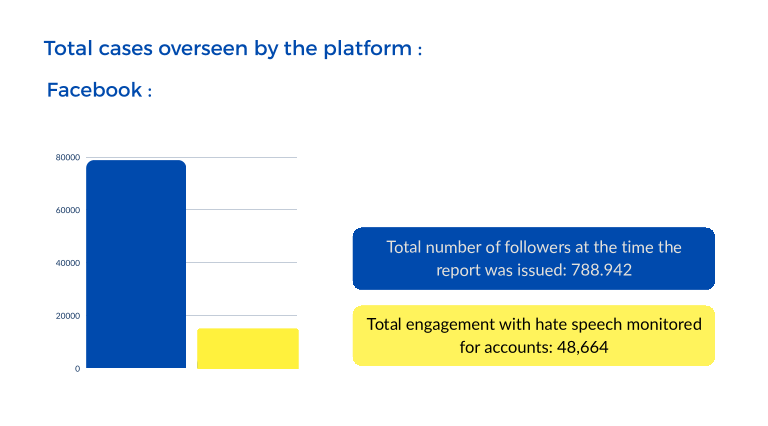
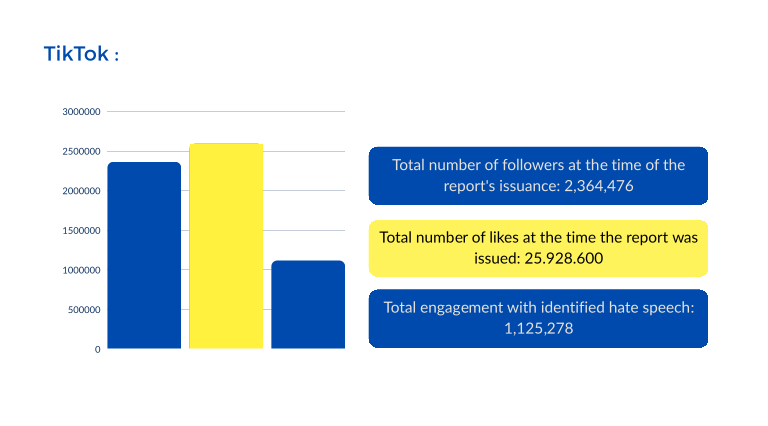
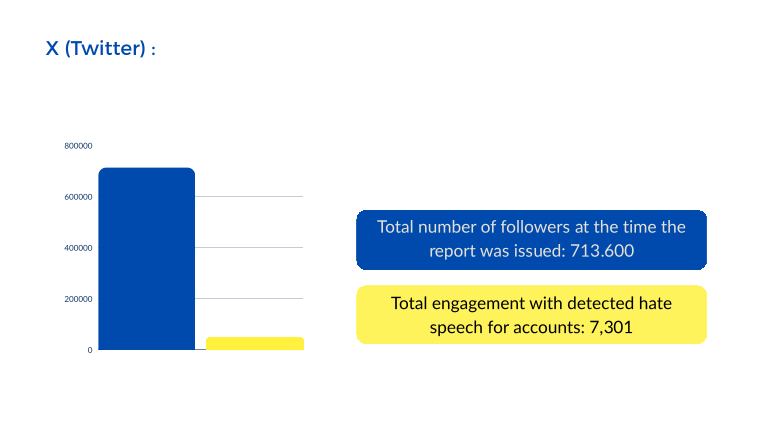
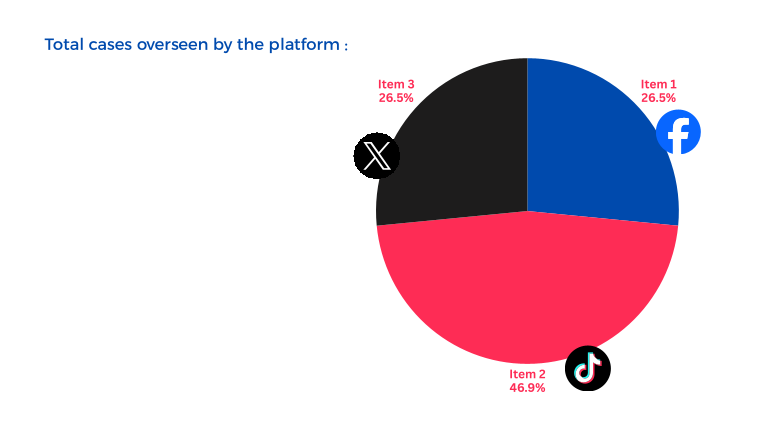
Below are charts showing the number of accounts monitored within the bulletin, follower counts, and the volume of interaction with documented hate speech cases during the monitoring process.
Analysis of Patterns and Trends
This section presents a focused analytical reading of the major patterns and lines derived from the documented materials of the thirty accounts monitored within the framework of the "Accounts Under the Microscope" bulletin. The analysis aims to highlight the nature of the discourse used, the targeted groups, the mechanisms of spread, and indicators of danger and potential escalation, providing a knowledge base to help understand the phenomenon and develop effective responses.
The documented materials showed a recurring pattern of hate speech that combines:
Collective descriptions and insults against ethnic, tribal, and political groups.
Demonization of political parties through accusations of treason, being agents, or corruption.
Implicit and explicit calls for violence or mass expulsion.
These patterns recur across multiple platforms and accounts, reflecting the existence of a fertile environment for fueling social and political polarization.
Recurring Targeted Groups:
Tribal/Ethnic Groups: Highlighting specific groups as a threat or adversary, with repeated calls for expulsion or incitement against them.
Political/Ideological Categories: Using collective labels and epithets (such as "Al-Kezan" or "Al-Qahata") to criminalize political parties or damage their reputation.
Patterns of Linguistic Rhetoric and Inciteful Rhetoric:
Wide Generalization: Holding entire groups responsible for the actions of their individuals and legitimizing collective punishment.
Dehumanization of the Other: Using insulting words and degrading comparisons that diminish the value of the other and pave the way for acceptance of violence.
Direct or Implicit Calls for Violence: Explicit or ambiguous calls for killing, fighting, or mass expulsion, or describing groups as a "cancer" that must be "eradicated."
Invoking Historical Narratives and Tragedies: Employing past events and narratives to justify revenge or current incitement and stir the emotional feelings of the audience.
Mechanisms of Publishing and Spread:
Reshare and Repetition Networks: Repeating the same phrases or hashtags across similar accounts, which multiplies spread and makes it harder to counter.
Linking Publishing Waves to Immediate Events: The intensity of publishing and incitement increases with the occurrence of political or field events, increasing agitation and polarization.
Employing Hashtags: Using repeated hashtags to unify discourse, attract new followers, and expand scope.
Indicators of Danger and Potential Escalation:
Direct calls for violence and mass expulsion, increasing the likelihood of attacks or displacement waves.
Linking identity and political affiliation, transforming political disputes into collective/ethnic conflict.
Content amplification networks that accelerate spread before platforms or authorities can respond.
The analysis shows that hate speech in the analyzed sample is not limited to verbal abuse but combines violent generalizations, incitement to violence, and the invocation of historical narratives to justify separation and revenge.
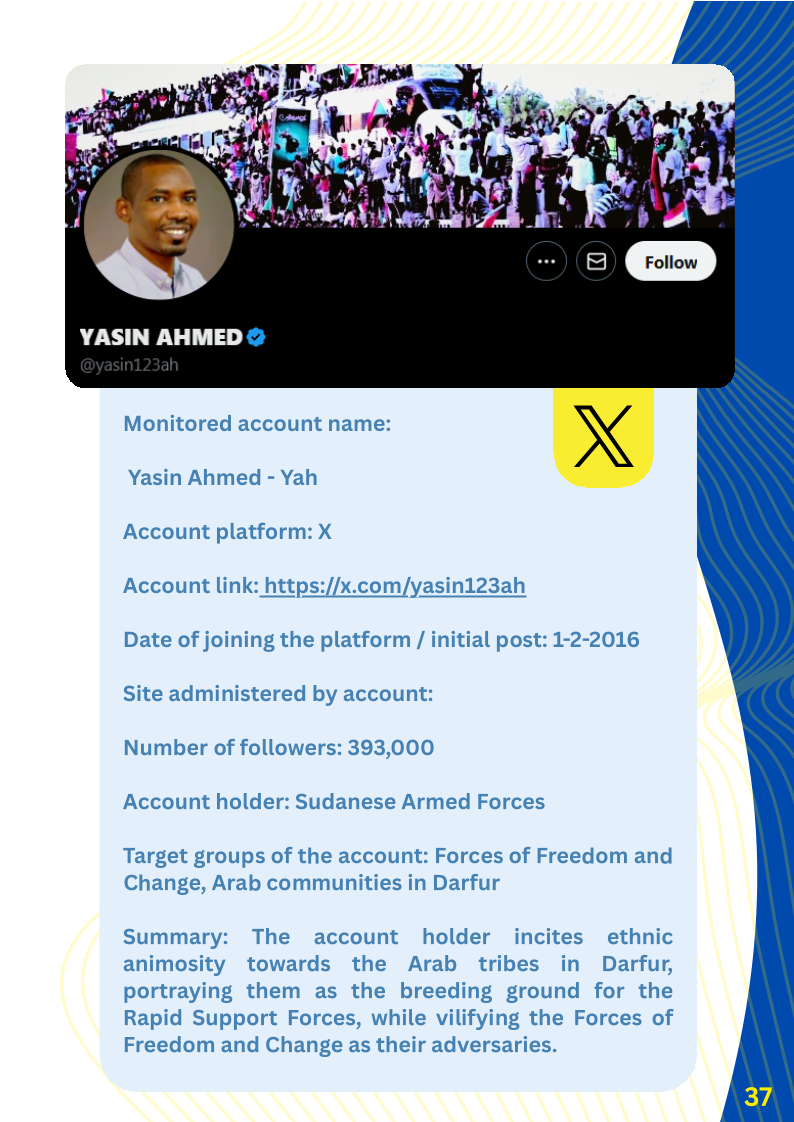
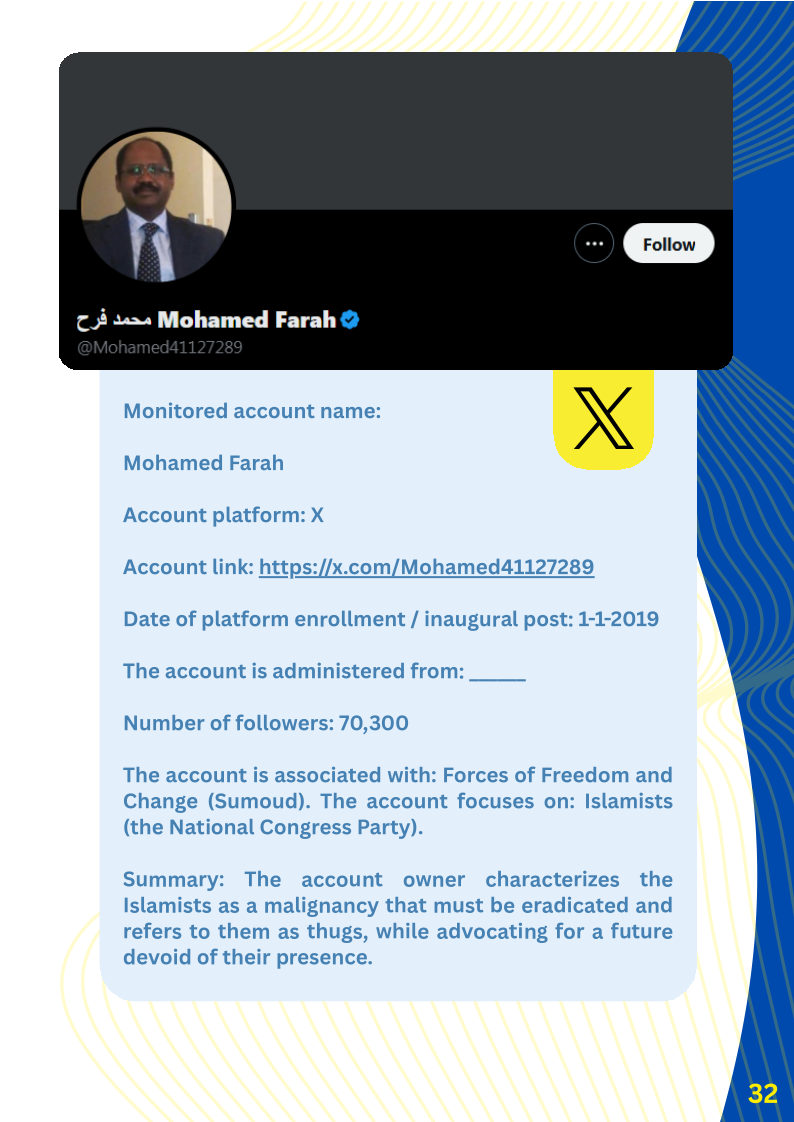
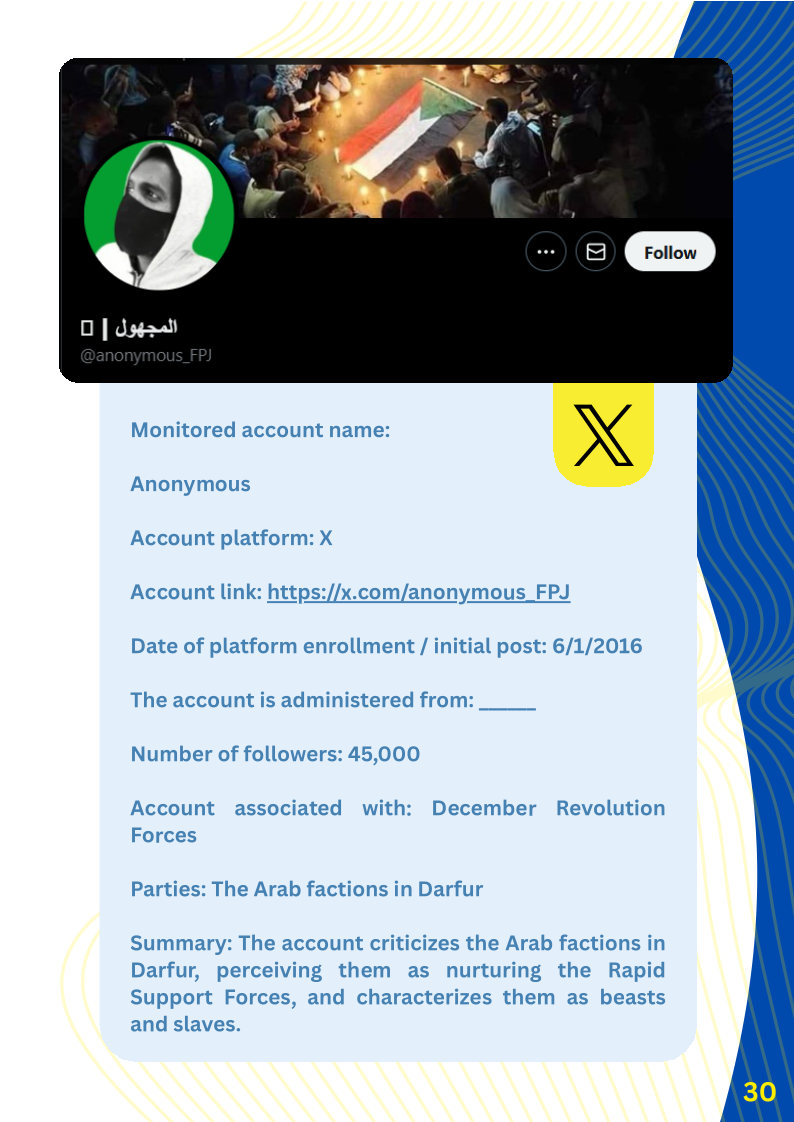
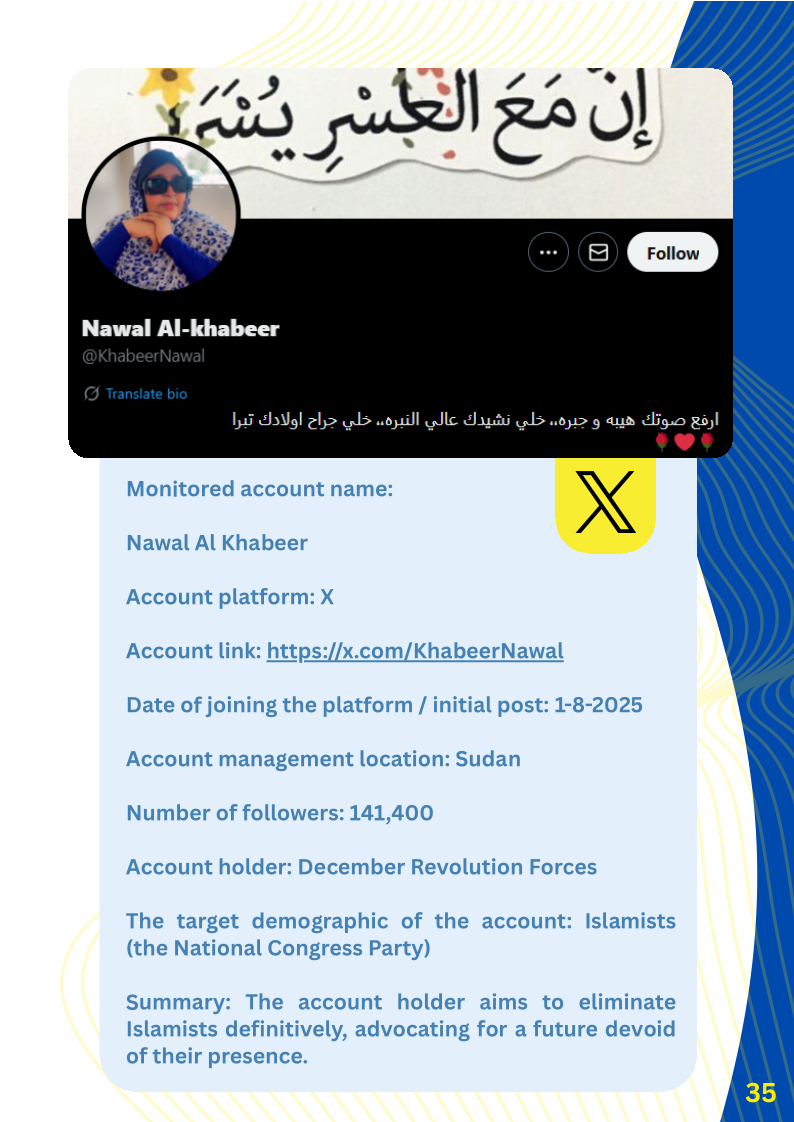
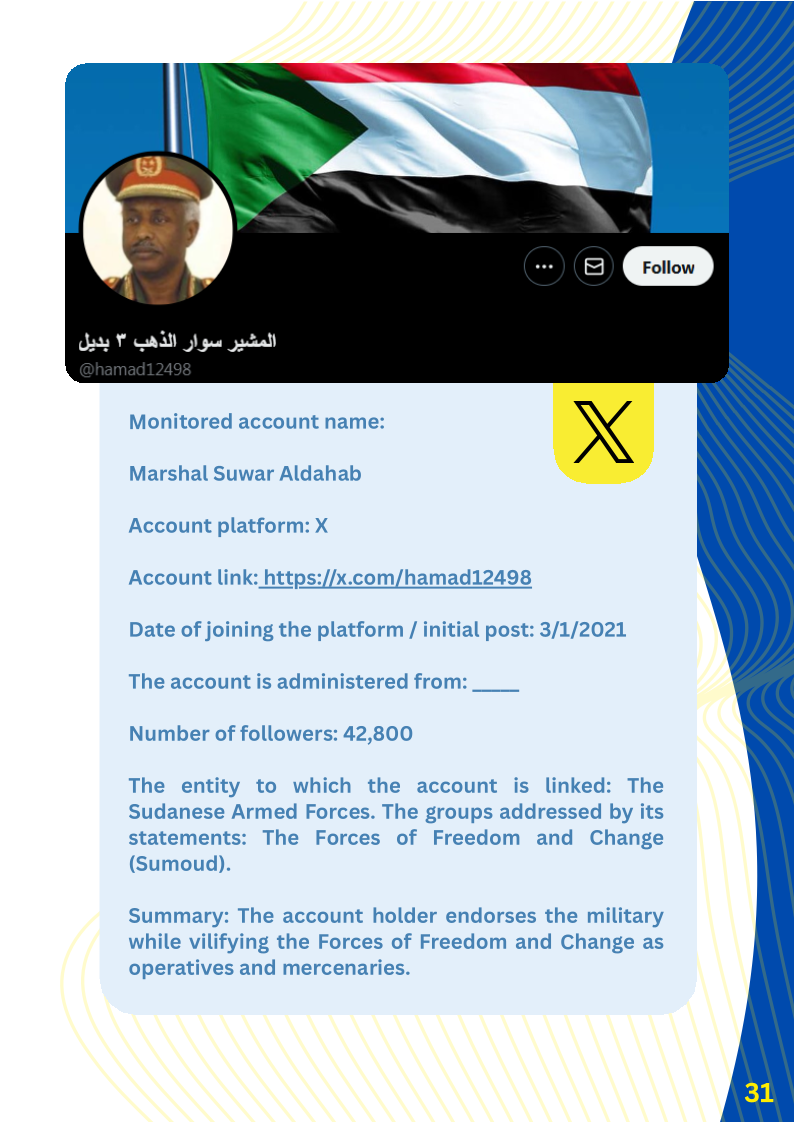
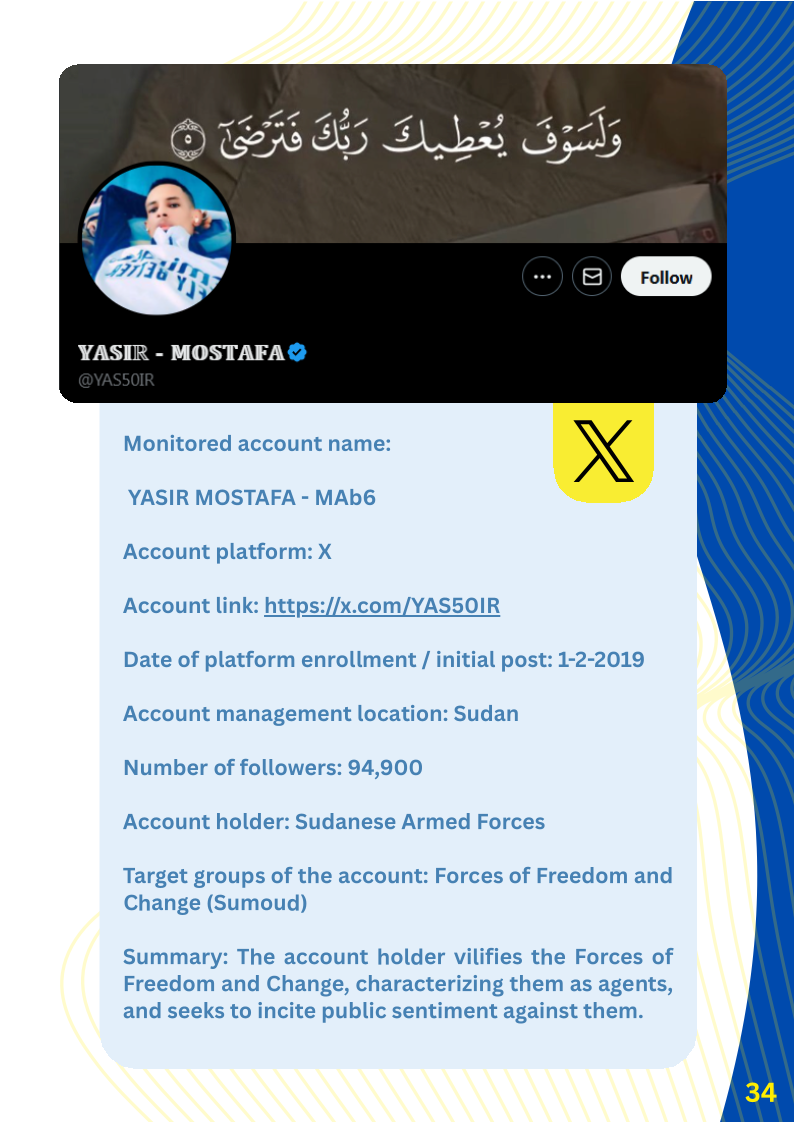
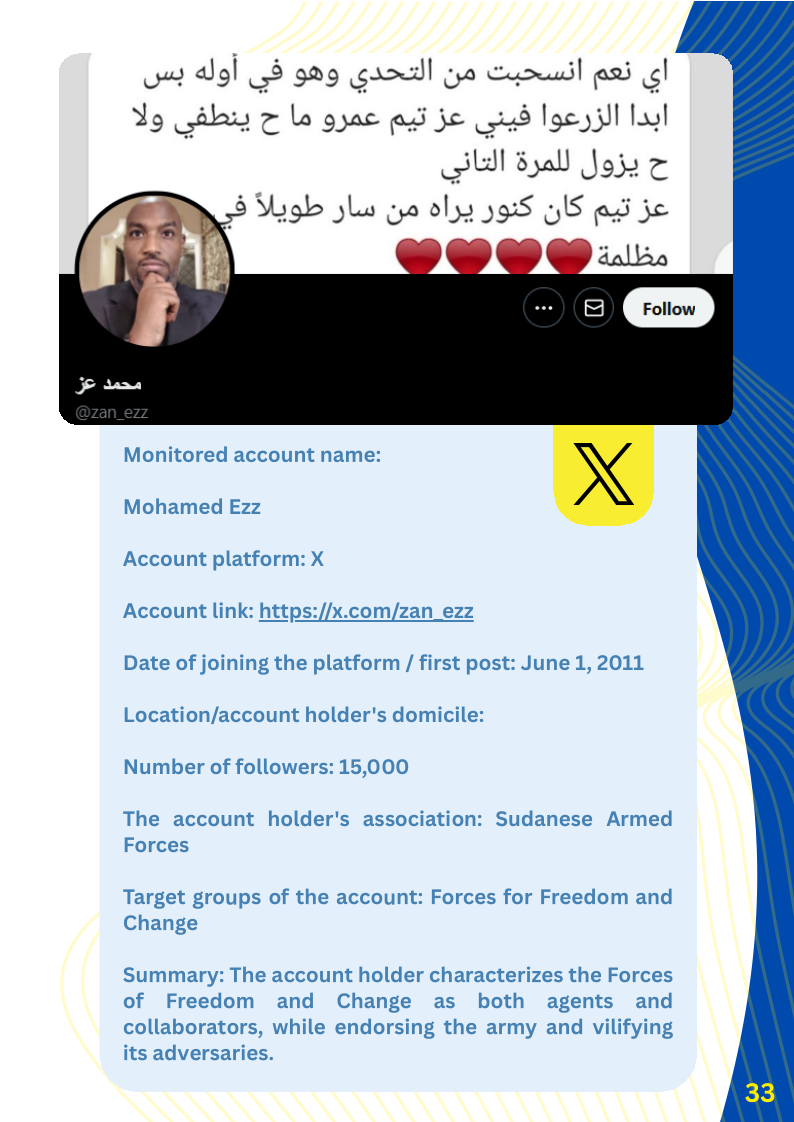
Public Information of Monitored Accounts:
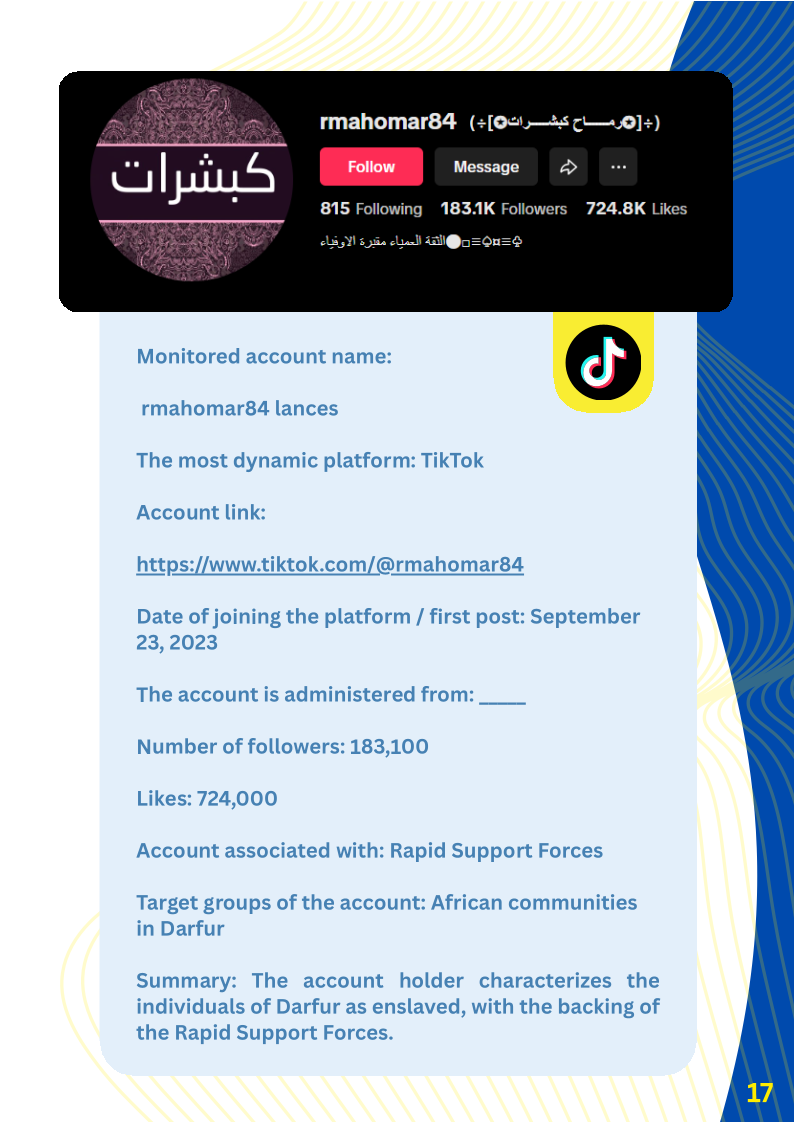
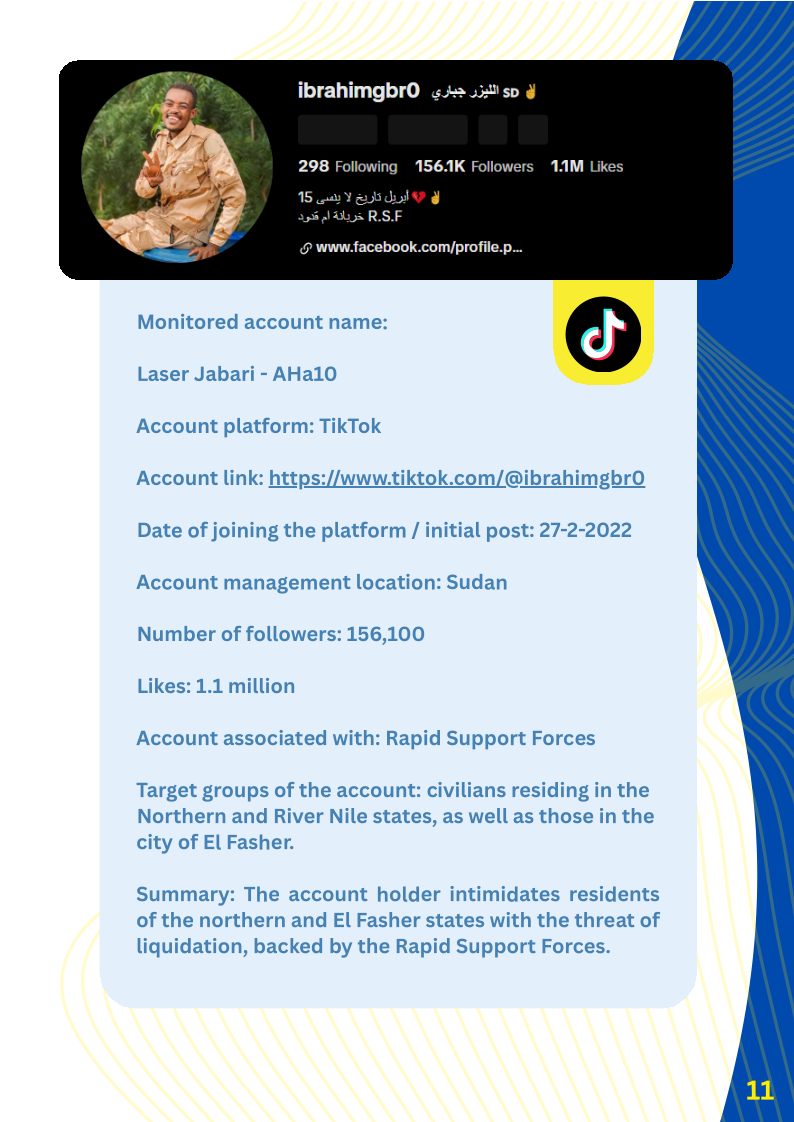
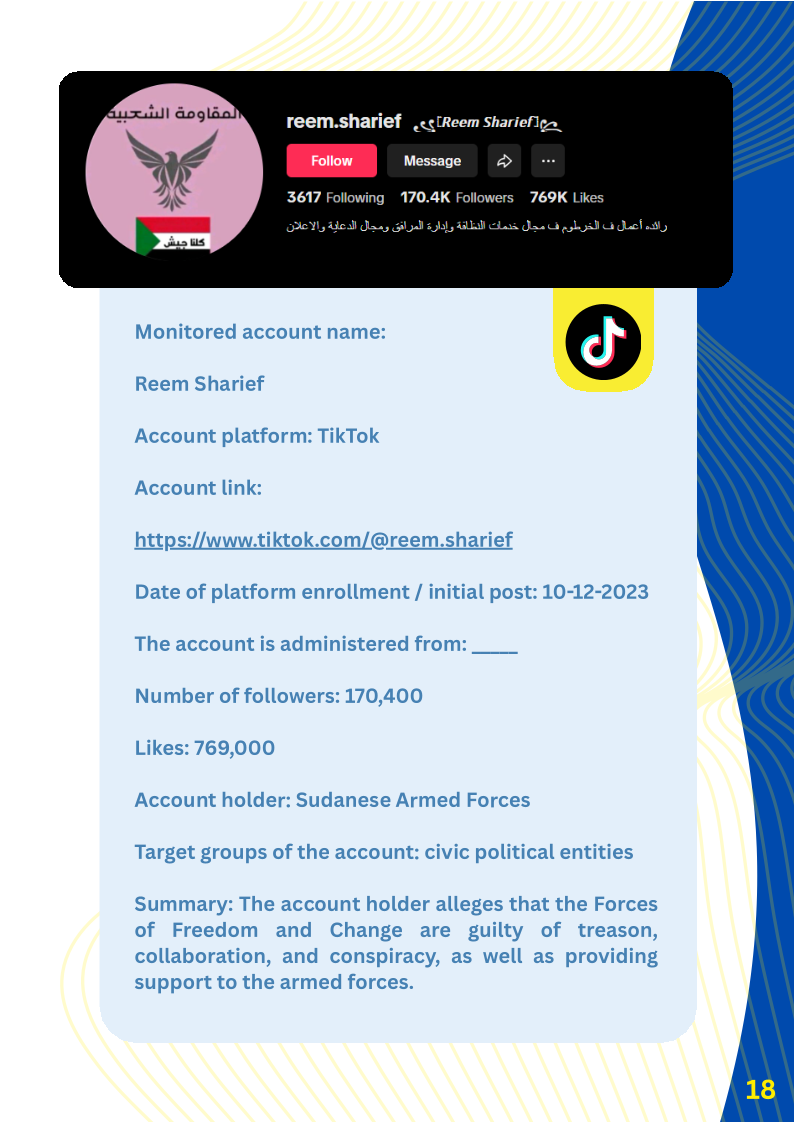
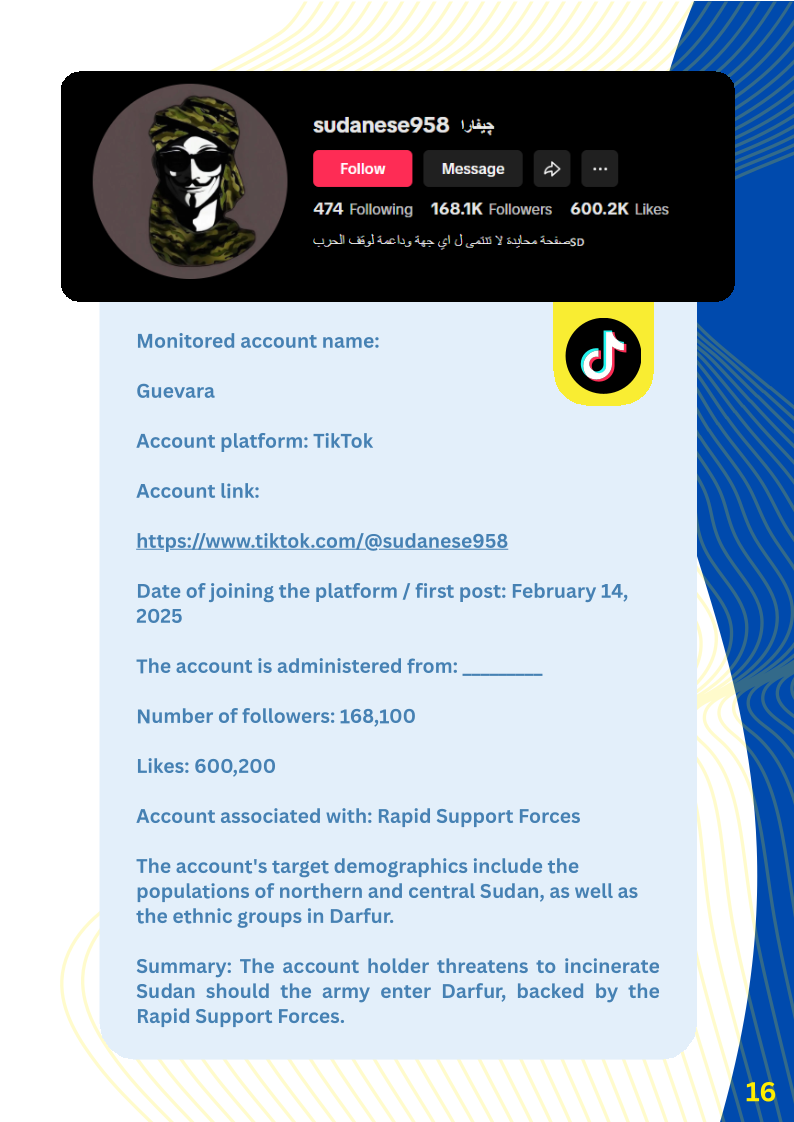
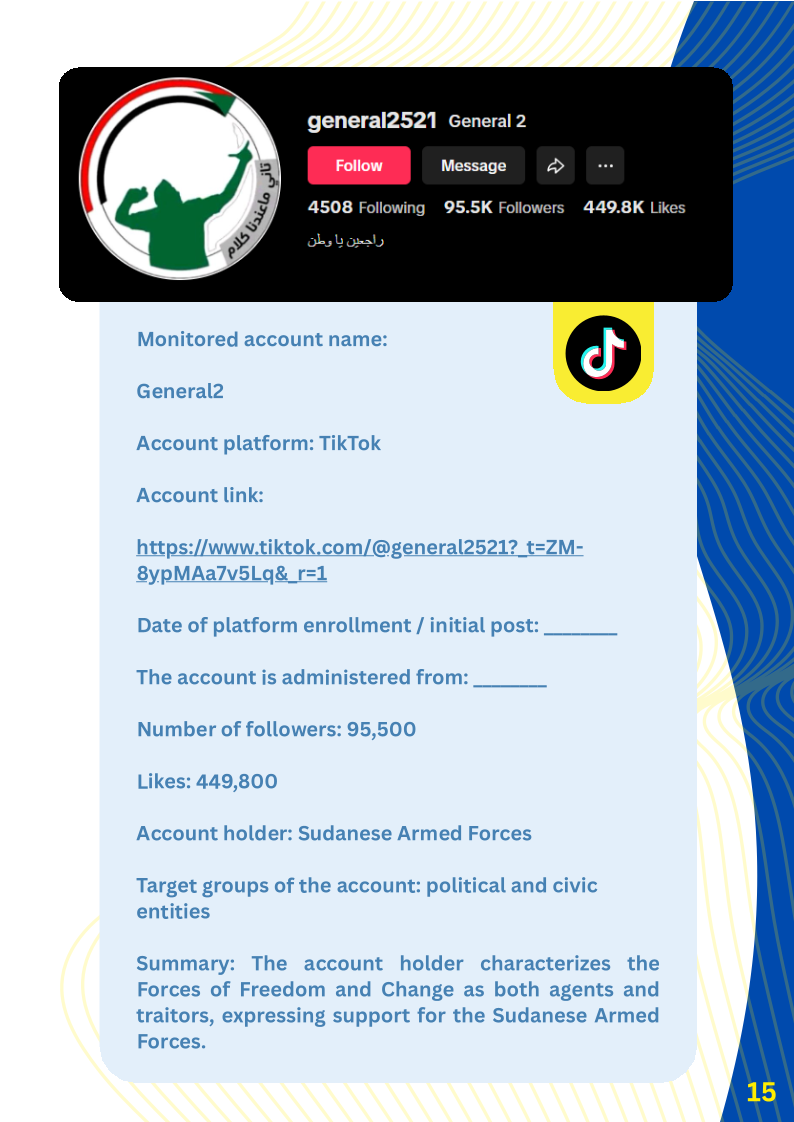
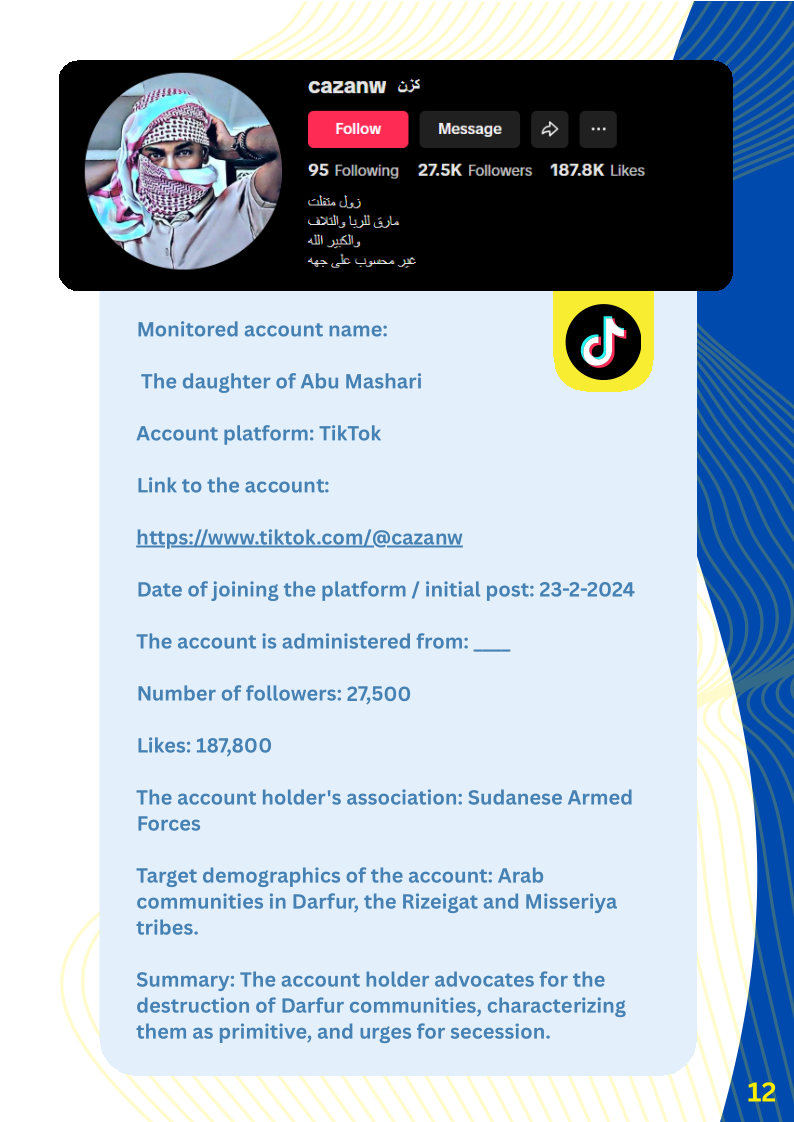
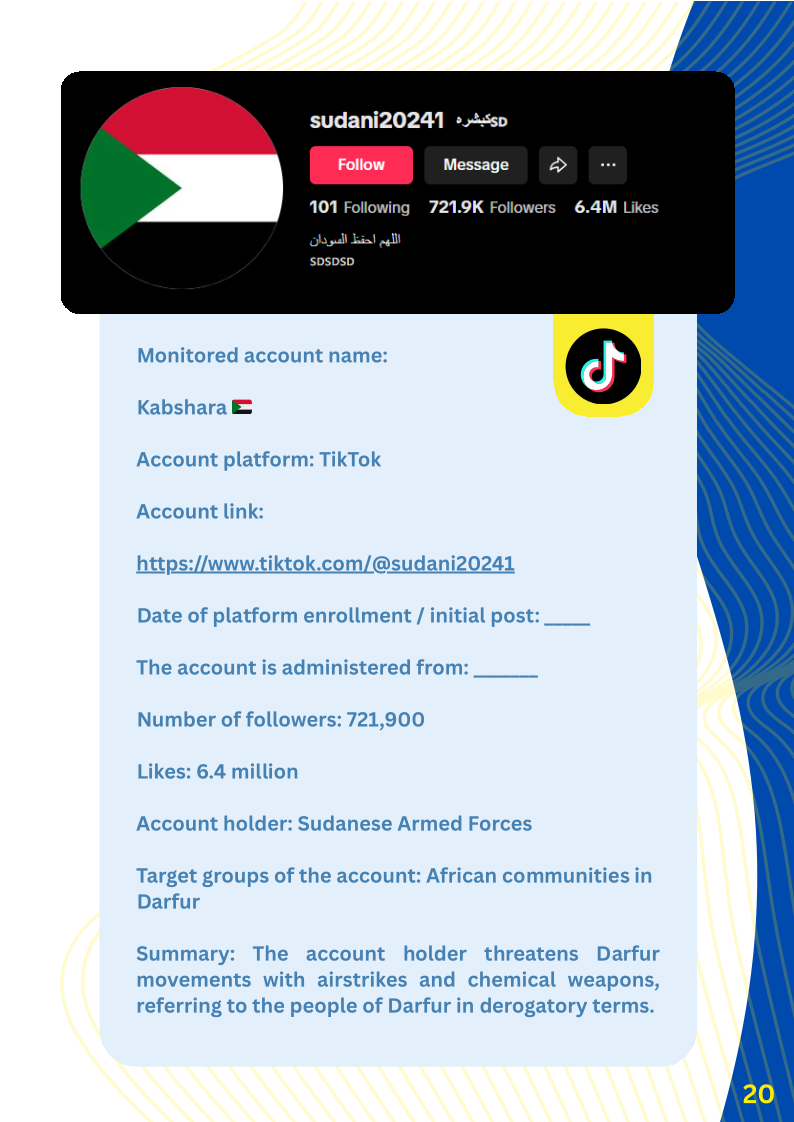
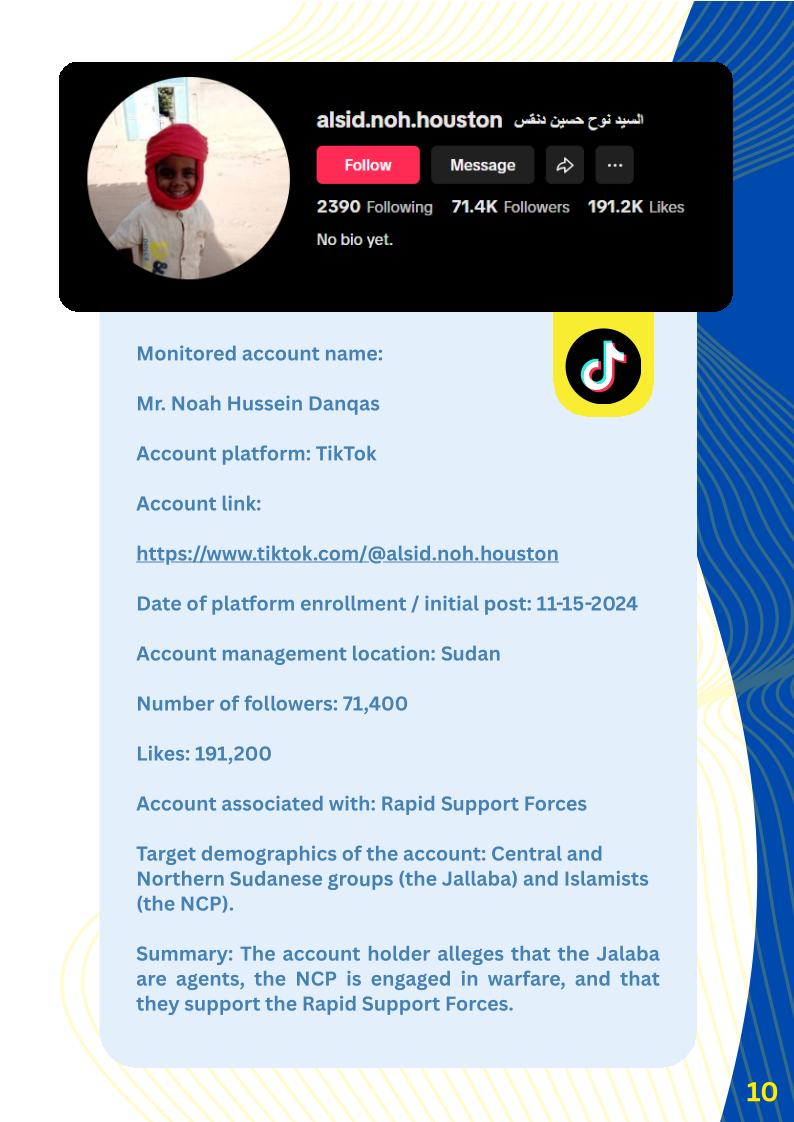
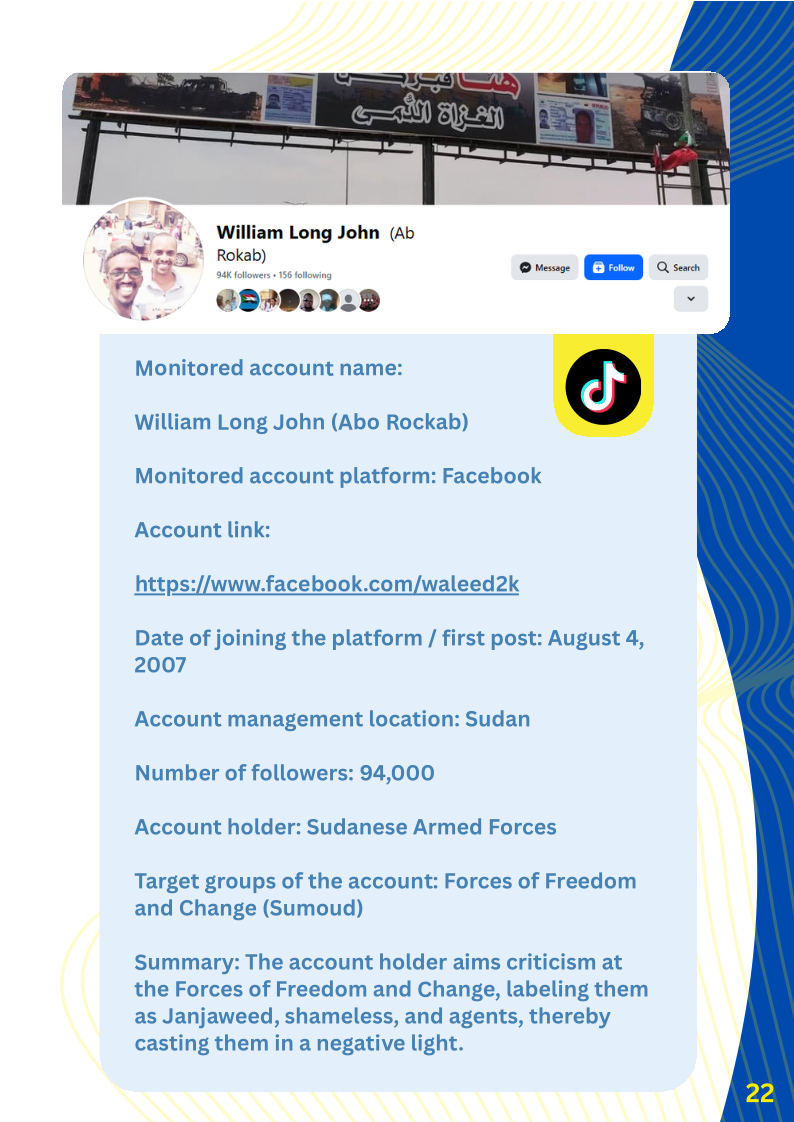
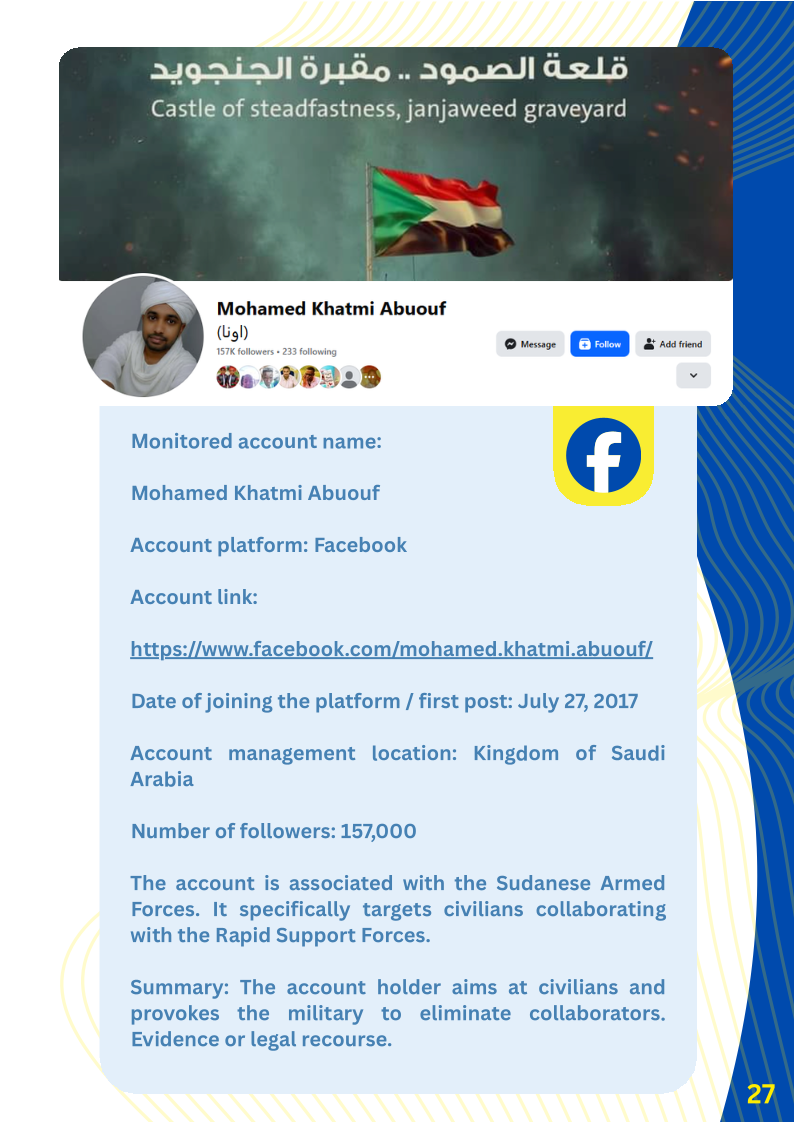
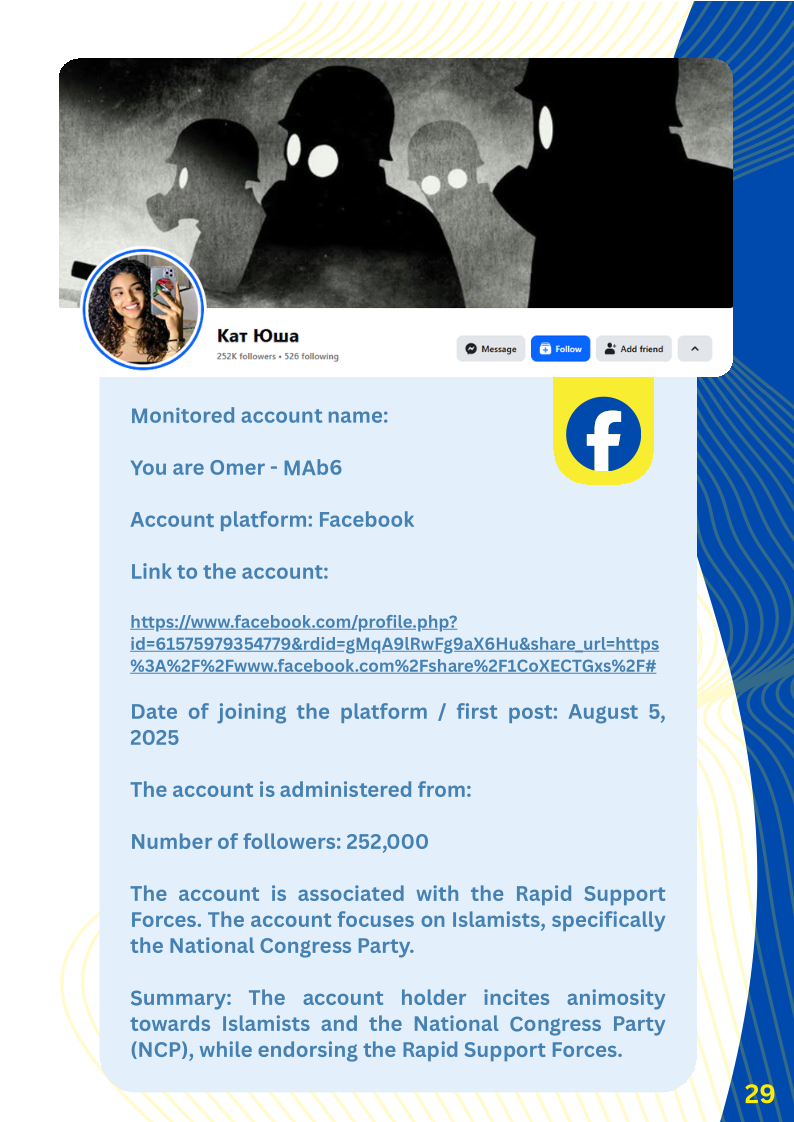
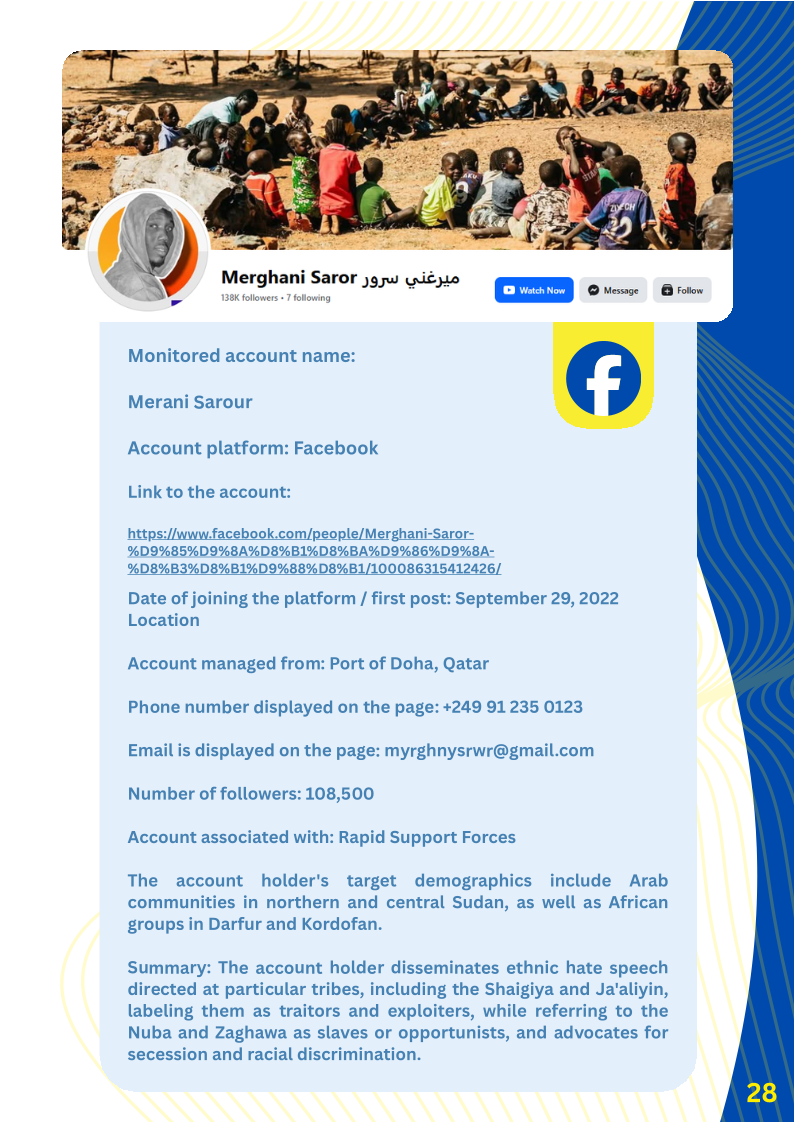
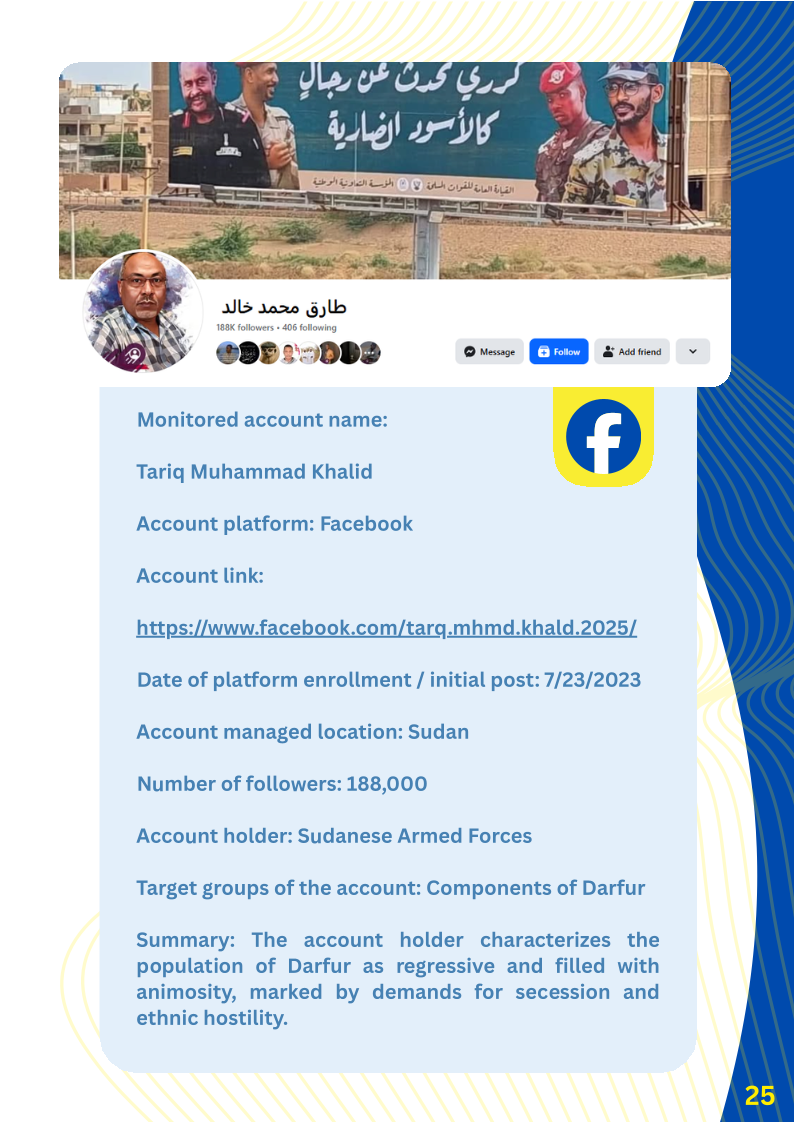
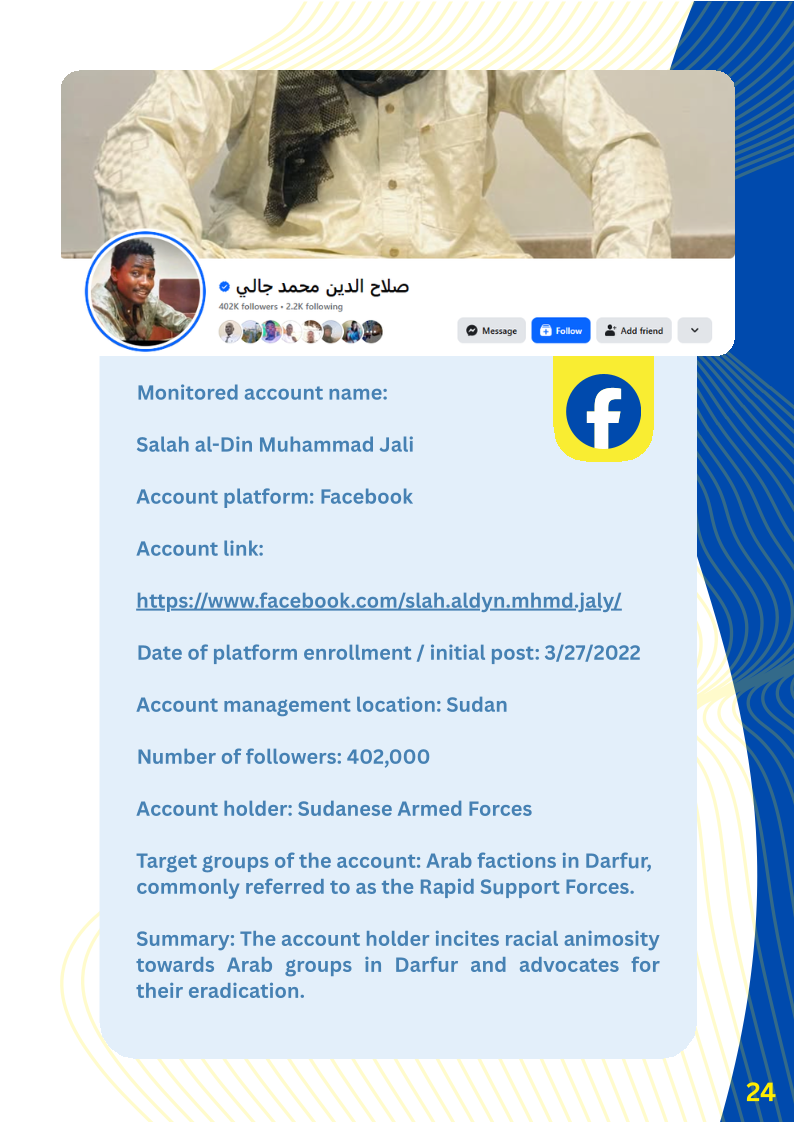
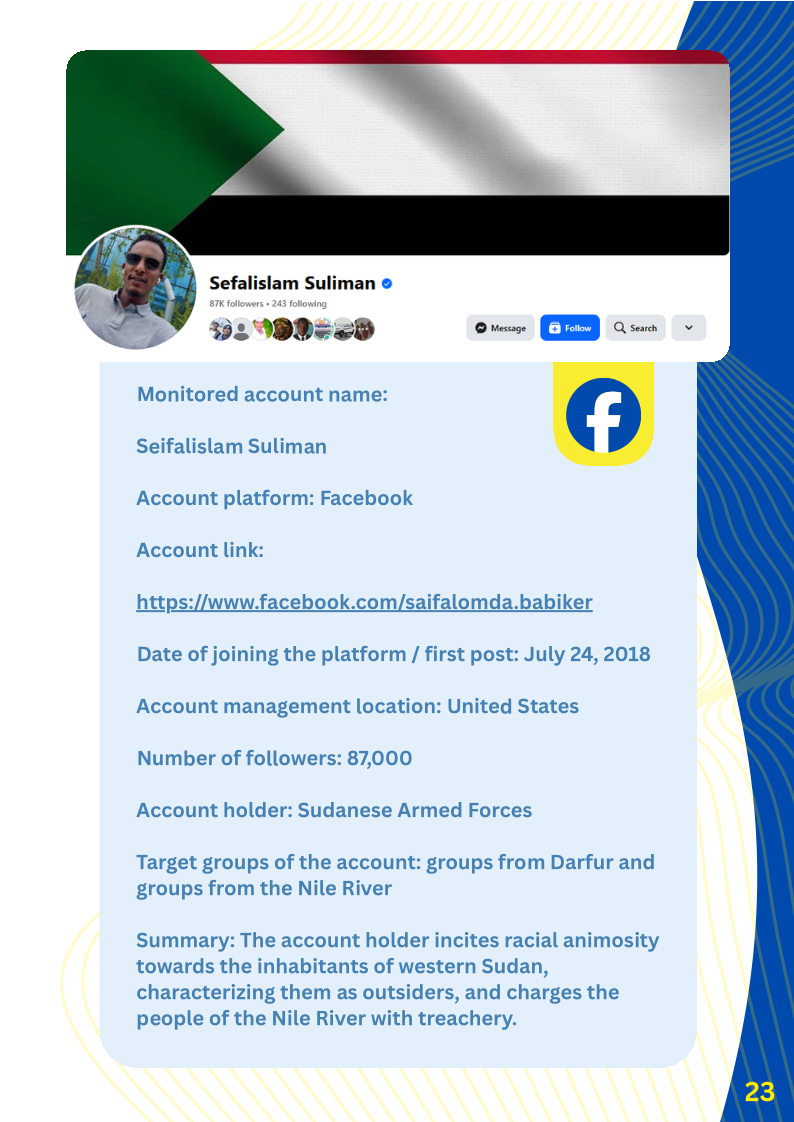
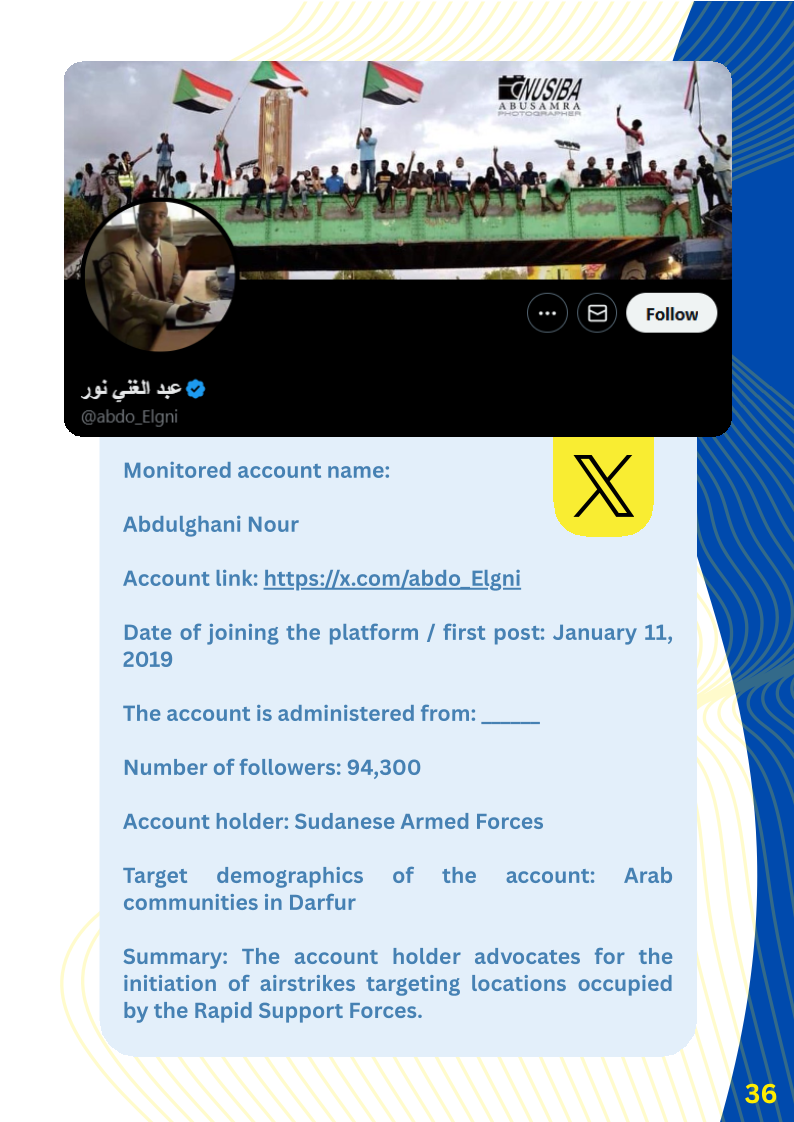
This public information of the accounts was collected from the open digital space without any violation of privacy or illegal access operations; it is information that the account holders themselves published.
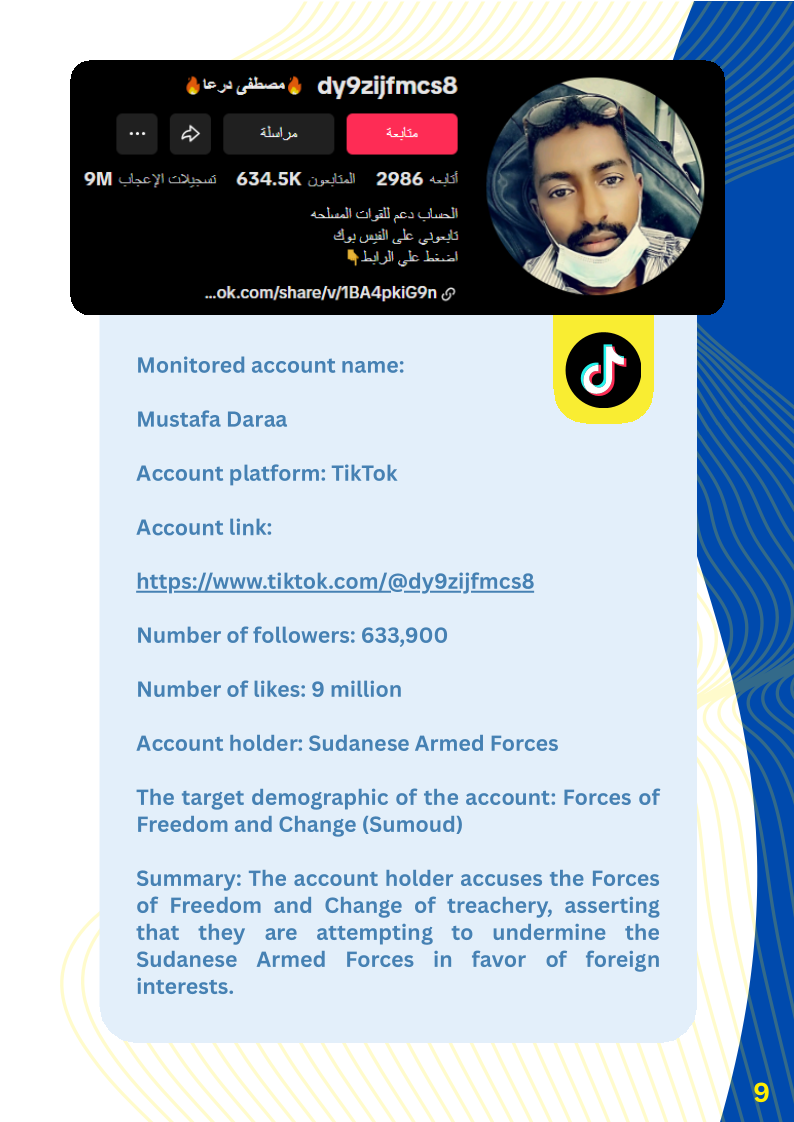
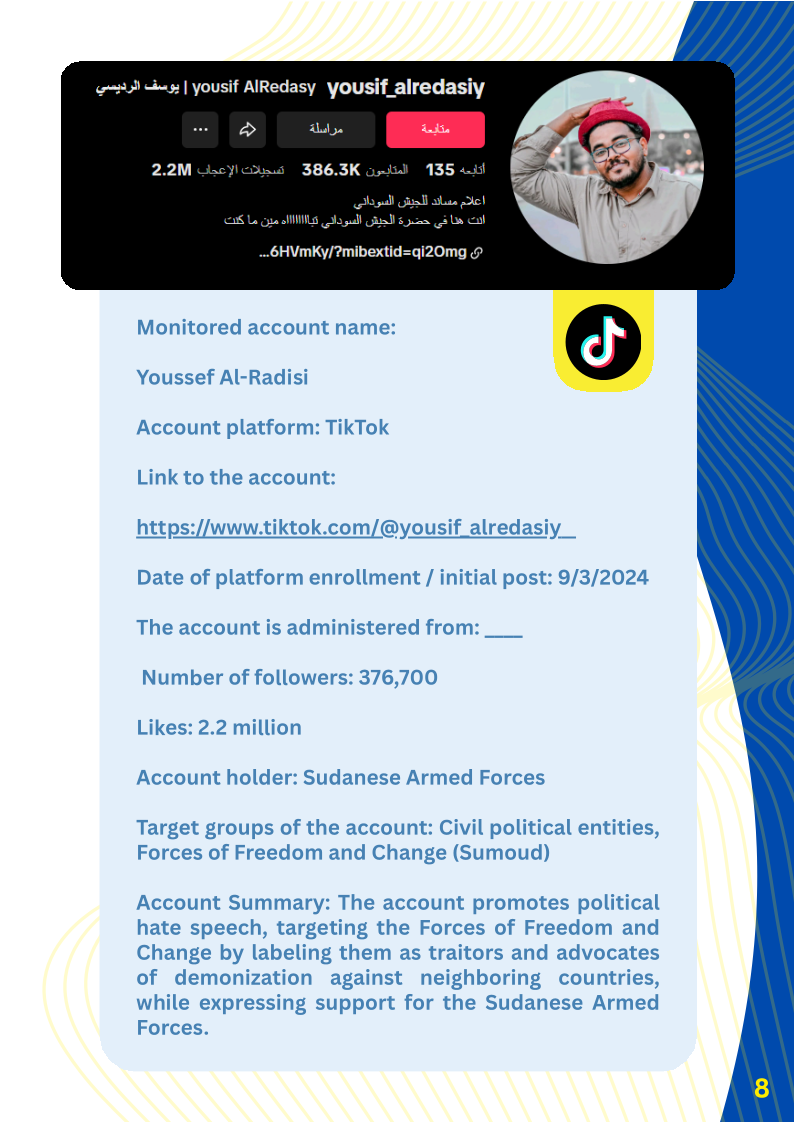
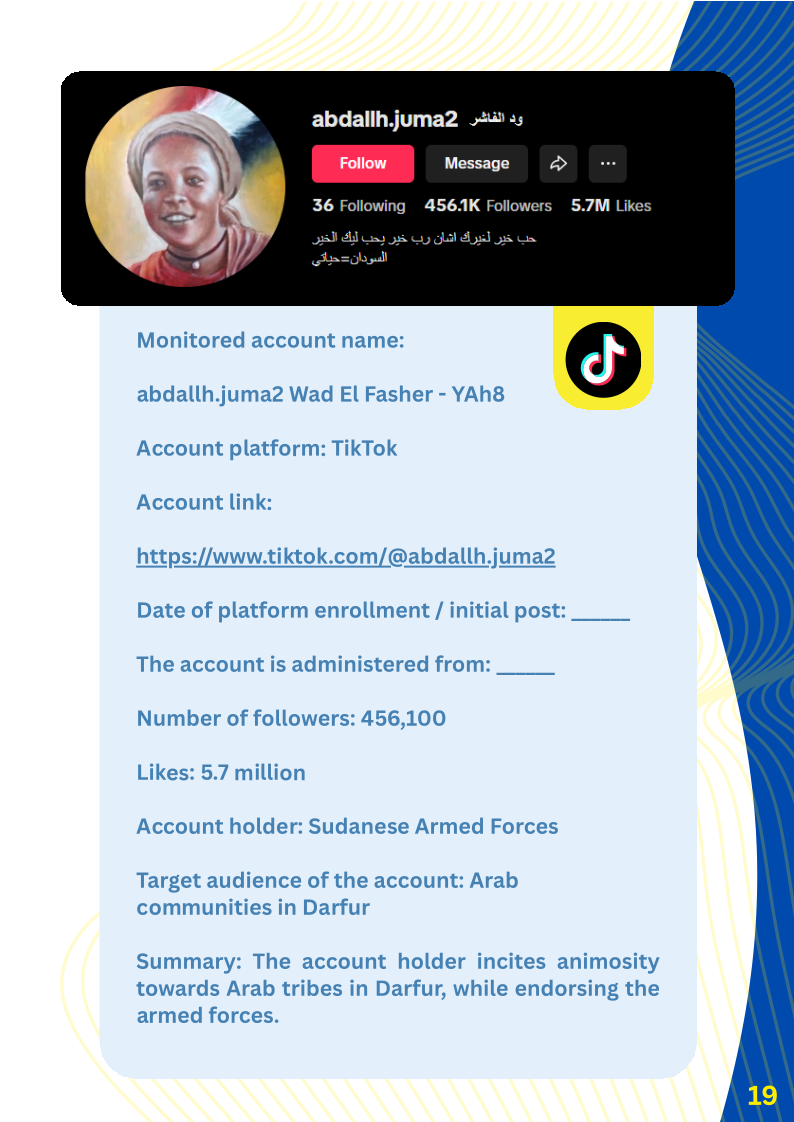
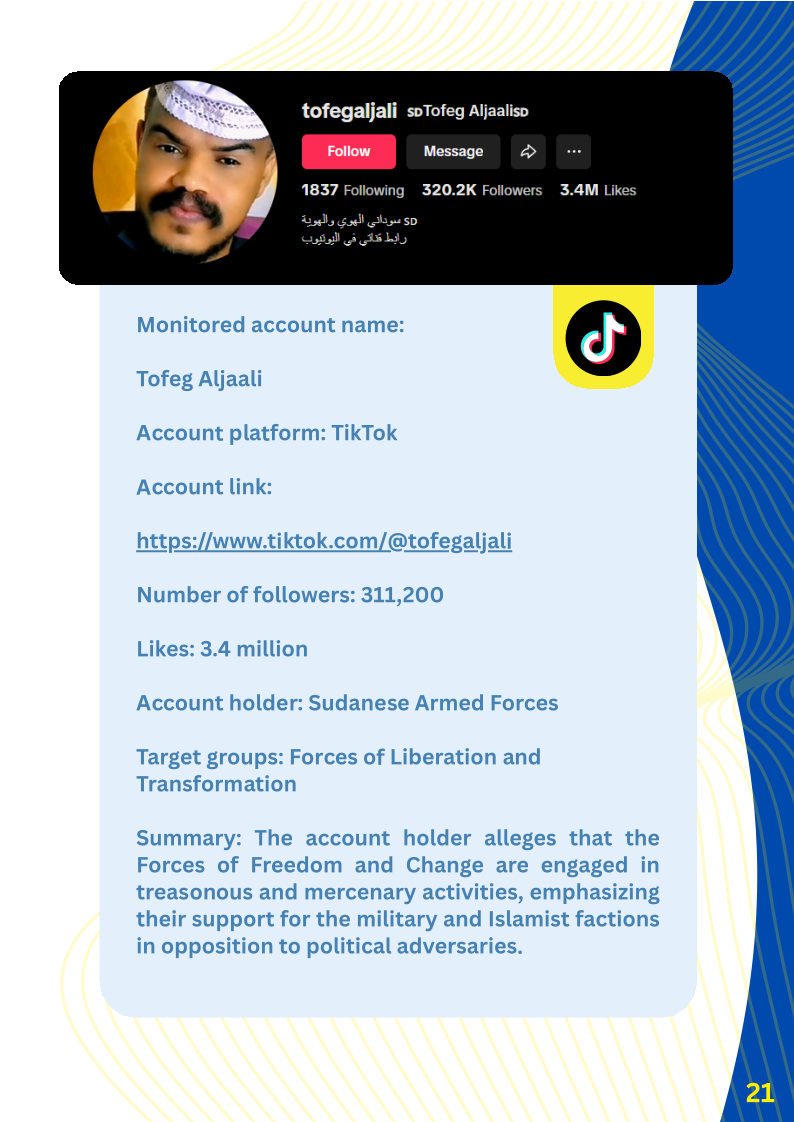
1. TikTok Accounts:


2. Facebook Accounts:
3. X "Twitter" Account:
Conclusion and Recommendations
Conclusion
The monitoring and analysis presented in this bulletin have shown that hate speech on social media platforms is not limited to verbal abuse or transient political argumentation, but rather goes beyond that to organized and escalating patterns including violent generalizations, dehumanization of the other, direct and implicit incitement to violence, and invoking historical narratives to justify revenge and exclusion.
These practices, if left unaddressed, threaten social peace and civil coexistence, and open the door to new waves of violence. Conversely, careful documentation and analysis of this phenomenon offer an opportunity to develop evidence-based responses grounded in legal and ethical standards.
Recommendations
Based on the foregoing, the "Safe Voice" program of the Kadn Center for Justice and Human Rights recommends the following:
Enhance Continuous Monitoring and Documentation: Continue to monitor accounts active in broadcasting hate speech, with periodic updating of data to ensure trends are tracked.
Effective Reporting to Platforms: Submit reports supported by documented evidence to the management of digital platforms regarding accounts and posts that incite violence or discrimination.
Legal Advocacy: Activate partnerships with lawyers and human rights organizations to explore possibilities for legal accountability of accounts or parties involved in spreading hate speech.
Awareness and Counter-Messaging Campaigns: Launch digital and media initiatives aimed at refuting misleading claims, promoting the values of coexistence, and reducing the impact of hostile discourse.
Coordination with Civil Society and Official Bodies: Unify efforts to reduce the risks of field escalation, especially in areas most vulnerable to the impact of hate speech.
Balance between Freedom and Responsibility: Emphasize that confronting hate speech does not mean restricting freedom of expression, but rather establishing controls to protect individuals and communities from harm and direct incitement to violence.
With this conclusion and these recommendations, the "Accounts Under the Microscope" bulletin concludes as a documentation and analysis tool seeking to transform monitoring into preventive action, supporting policies and programs aimed at building a fairer and safer digital space that respects human dignity and fortifies society against the dangers of hatred and violence.