Executive Summary
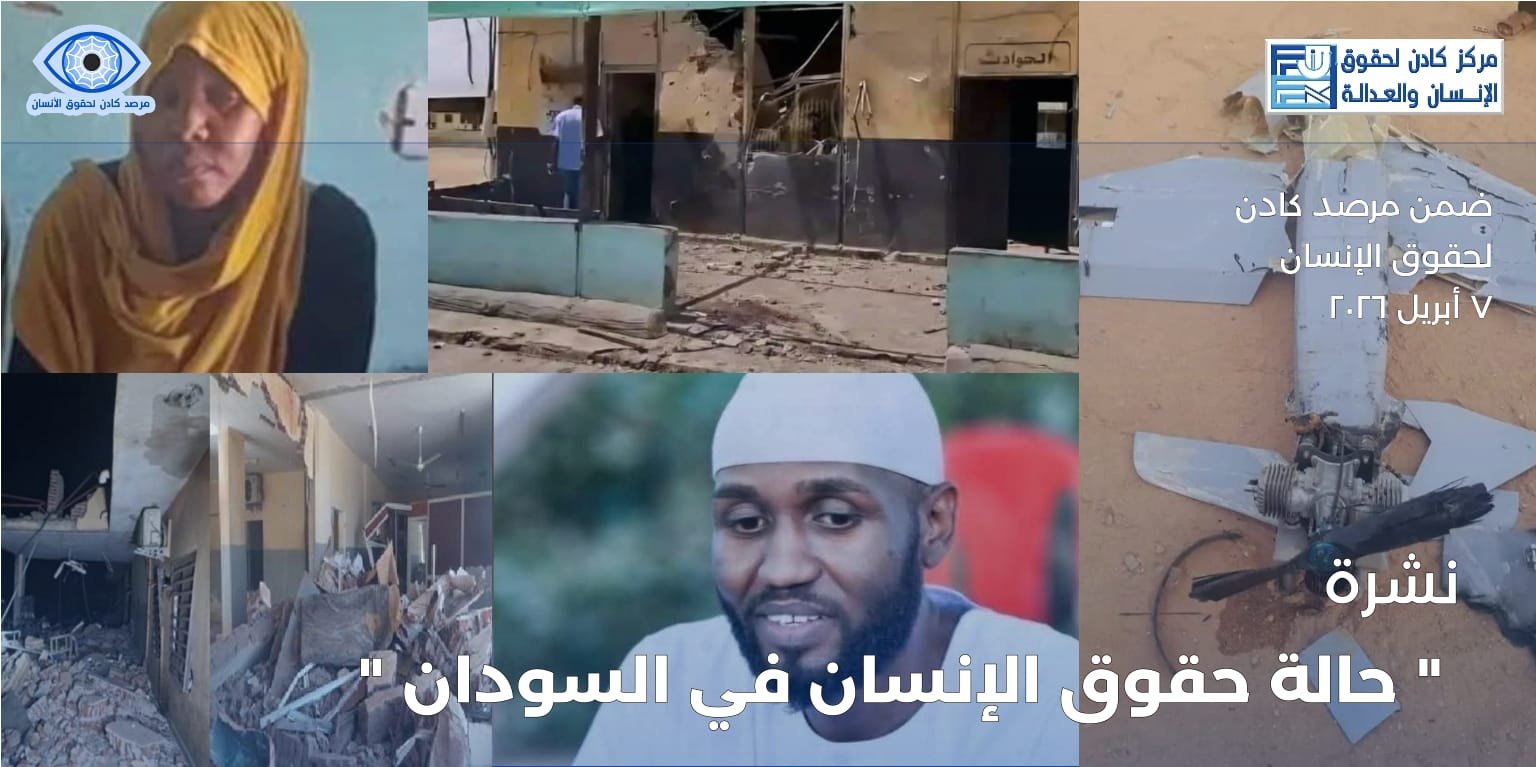
This bulletin reviews the most prominent features of the human rights situation in Sudan during the period from March 1 to April 2, 2026, amid the ongoing armed conflict and its expanding geographic scope. Monitoring reveals a troubling escalation in patterns of grave violations, particularly those associated with the targeting of civilians, the deterioration of the humanitarian situation, and the undermining of fundamental rights and freedoms guarantees.
At least 14 major incidents of civilian targeting using wide-impact combat means were documented, including drones, aerial bombardment, and artillery, resulting in the deaths of more than 250 civilians and injuries to more than 350 persons. Data also showed repeated attacks in specific areas, particularly in the Kordofan, Darfur, and Blue Nile regions, with direct targeting of civilian gatherings such as markets, condolence ceremonies, and means of transportation.
In a related context, attacks on health facilities and targeting of medical personnel were recorded, alongside widespread arbitrary detention cases encompassing civilians, academics, and professionals, with one documented death in custody due to medical negligence. Waves of forced displacement were also monitored, affecting more than 11,955 persons during the monitoring period, amid deteriorating humanitarian conditions and a severe shortage of aid.
Geographically, the data shows violations spread across at least 4 major regions, with clear concentration hotspots in areas of active conflict, reflecting the breadth of risks facing the civilian population. Indicators also suggest that these violations are characterized by recurrence, temporal continuity, and geographic spread, reinforcing the likelihood of systematic behavioral patterns.
This bulletin concludes that the human rights situation in Sudan is experiencing accelerating deterioration, with an escalation in the use of force against civilians and increasing restrictions on fundamental rights — raising serious concerns about the commission of grave violations that may rise to the level of war crimes and crimes against humanity, should their widespread or systematic nature be established.
Introduction
The Sudan Human Rights Status Bulletin is a bi-monthly periodical concerned with monitoring and analyzing patterns of human rights violations in Sudan in the context of the ongoing conflict. The bulletin provides an evidence-based analytical reading of documented facts, focusing on patterns, geographic distribution, and quantitative indicators of violations.
This bulletin is issued within the activities of the Kaden Human Rights Observatory Program, affiliated with the Kaden Center for Human Rights and Justice, in the framework of supporting documentation efforts, raising awareness of the human rights situation, and contributing to accountability processes at both national and international levels.
Methodology
This bulletin relies on a human rights monitoring methodology that combines direct documentation by the Kaden Human Rights Observatory with analysis of data issued by UN bodies, alongside a review of information available through open sources. This approach aims to provide a reliable and comprehensive picture of violation patterns during the monitoring period.
All facts are subject to a multi-level verification process, including: review of the temporal and spatial consistency of incidents, cross-referencing between different sources to verify information, and analysis of the general context of each incident and its compatibility with documented violation patterns.
Open Source Verification techniques are also used to enhance the accuracy of information, including geographic tracking of events and analysis of available digital evidence when accessible.
In adherence to ethical standards, personal names and sources of direct testimonies have been omitted to protect the safety of individuals, with a focus on presenting facts in an analytical format based on patterns.
This bulletin does not claim comprehensive coverage of all violations, given the access constraints in conflict areas, but it does provide reliable indicators of general trends and violation patterns during the period covered by the report.
Pattern Analysis
This section adopts an analytical approach aimed at identifying recurring violation patterns during the monitoring period, by classifying incidents according to their nature and linking them to temporal and geographic context, thereby aiding in understanding conflict trends and developments.
Pattern 1: Targeting of Civilians
Targeting of civilians is the most prominent pattern during the period, with at least 14 major cases documented, resulting in the deaths of more than 250 civilians and injuries to more than 350 persons.
These attacks were carried out using wide-impact combat means, most notably drones, aerial bombardment, and artillery. The facts indicate clear targeting of civilian gatherings, including condolence ceremonies, markets, means of transportation, and residential neighborhoods, alongside repeated attacks in the same areas within short time periods — particularly in South and North Kordofan and the Blue Nile — reflecting a pattern characterized by the absence of distinction between civilian and military targets.
Pattern 2: Targeting of Health Facilities and Medical Personnel
A number of cases were monitored indicating direct and indirect targeting of health facilities, including the shelling of medical facilities, the killing and wounding of healthcare workers, and the arrest of doctors while performing their duties. These attacks resulted in casualties among health sector workers and the shutdown of some facilities.
This pattern shows that targeting extends to health infrastructure and human resources, undermining the healthcare system’s ability to respond to humanitarian needs in conflict areas.
Pattern 3: Arbitrary Detention and Detention-Related Violations
Facts indicate the widespread use of arbitrary detention as a recurring tool. Individual and collective detention cases were documented targeting civilians, academics, doctors, and employees. These cases are characterized by the absence of clear legal procedures and the denial of detainees’ right to communicate with their families or receive fair trial guarantees.
A death in custody due to medical negligence was also documented, reflecting detention conditions that lack the minimum humanitarian standards.
Pattern 4: Forced Displacement and Humanitarian Deterioration
Data indicates massive waves of displacement resulting from escalating hostilities, with the displacement of more than 11,955 persons documented during the monitoring period, in addition to more than one million displaced persons in the Kordofan region.
Displacement is directly linked to attacks on residential areas and markets, with displaced persons concentrating in urban centers already suffering from weak resources, further exacerbating the humanitarian crisis.
Pattern 5: Unfair Trials and Use of the Judiciary
Cases involving the issuance of harsh judicial sentences were monitored, including the death penalty and long-term imprisonment, in the context of the conflict, based on security and state-related charges. These cases raise concerns about compliance with fair trial guarantees, particularly given the complex political and security context.
Pattern 6: Restrictions on Freedom of Expression and Journalistic Work
Cases of targeting journalists while performing their duties were documented, including temporary detention, searches, and the filing of legal charges. This pattern reflects an increasingly restrictive environment for freedom of expression, which may impact the flow of information in the context of the conflict.
The documented patterns indicate that violations during the monitoring period were neither isolated nor entirely random, but are characterized by recurrence and geographic spread, with similar methods of execution. These patterns are intertwined: attacks on civilians are linked to displacement, arbitrary detention is accompanied by restrictions on freedoms, and targeting of health facilities exacerbates the humanitarian situation. Together, these indicators reflect escalating trends in violence and violations that may point to systematic behavioral patterns, calling for further monitoring and analysis in future periods.
Geographic Analysis
This section focuses on analyzing the spatial distribution of violations during the monitoring period, with the aim of identifying concentration areas, spread patterns, and the relationship between geography and the nature of violations, thereby aiding in understanding conflict dynamics and development.
General Geographic Distribution
Data shows that violations were distributed across at least 4 major regions: the Kordofan Region (South, North, and West Kordofan), the Darfur Region (North, South, East, West, and Central Darfur), the Blue Nile Region, and White Nile State.
This distribution reflects the breadth of the conflict, which is no longer confined to specific areas but extends across multiple regions, with differences in the density and patterns of violations from one area to another.
Concentration Areas (Hotspots)
Geographic hotspots with a high density of violations are noted, where incidents recurred in the same locations within short time periods. The most prominent include: South Kordofan (Al-Dilling, Al-Sanut), North and West Kordofan (Al-Fula, Al-Rahad, Bara), the Blue Nile Region (Al-Kurmuk, Qaysan, Kasha), and Darfur (Nyala, Zalingei, Seref Omra, Al-Daein, Kutum).
This recurrence indicates the presence of active conflict areas under continuous military pressure, increasing the likelihood of repeated violations against civilians.
Variation in Violation Patterns by Geography
Data shows variation in the nature of violations according to the geographic characteristics of each area. Rural areas and villages experience large-scale attacks with high lethal density, generally using aerial bombardment or direct attacks, as in South Kordofan and parts of Darfur. Urban centers see concentrations of arbitrary detention patterns and restrictions on freedoms, alongside limited attacks on infrastructure, as in Nyala, Zalingei, and Al-Ubayyid. Transportation routes and open areas are subject to direct targeting of civilians in transit, including vehicles and means of transport, as in Al-Fula and Al-Rahad.
Relationship Between Geography and Conflict Patterns
The analysis indicates a clear correlation between areas of active military operations and higher rates of violations, where aerial attacks and bombardment concentrate in areas experiencing ongoing clashes, such as Kordofan and the Blue Nile. It is also noted that some urban areas under the control of conflict parties exhibit different patterns of violations, including arrests and restrictions on civil activities, reflecting the diversity of control tools according to geography.
Geographic Extent of Displacement
Displacement is directly linked to areas of bombardment and attacks, as populations move from active conflict zones such as Al-Kurmuk, Qaysan, and Al-Dilling to relatively more stable urban centers such as Al-Damazin, Baw, and Al-Rusayris — creating increasing pressure on resources and services in receiving areas.
The data indicates that violations during the monitoring period are characterized by wide geographic spread with intense concentration in specific hotspots, particularly in Kordofan, Darfur, and the Blue Nile. The analysis also shows spatial variation in the nature of violations, where patterns of violence differ between rural areas, urban centers, and transportation routes. This distribution reflects a conflict that is geographically multi-dimensional, with an overlap between areas of military operations and areas of civilian control, which broadens the scope of risks facing the civilian population and increases the complexity of humanitarian and human rights responses.
Documented Case Samples
This section presents a selection of documented cases that reflect violation patterns during the monitoring period, through the narration of specific facts representing indicators of the nature and geographic spread of violations. These cases were selected because they reflect recurrence, diversity, and severity of impact on civilians.
First: Cases of Civilian Targeting
Documented cases indicate a recurring pattern of attacks directly or disproportionately targeting civilians, using wide-impact combat means including drones, aerial bombardment, and artillery.
Case No. 1 – Al-Dilling, South Kordofan (March 11, 2026): Artillery shelling targeted residential neighborhoods, resulting in the deaths of 7 civilians including a child, and the injury of 13 others.
Case No. 2 – Faqousa and Hajar Al-Jawad, South Kordofan (March 18, 2026): A large-scale attack resulted in the deaths of more than 50 civilians, along with a large number of wounded and missing persons.
Case No. 3 – Al-Sanut, South Kordofan (March 28, 2026): An airstrike targeted a condolence ceremony, resulting in the deaths of 7 civilians and injuries to 39, as part of a series of strikes that led to more than 60 deaths and more than 100 wounded within one week.
Case No. 4 – Al-Fula, West Kordofan (March 11, 2026): Civilians were targeted while in transit by a drone, resulting in the deaths of 52 persons.
Second: Cases of Targeting Health Facilities and Medical Personnel
These cases reflect a pattern of targeting the health system, whether through direct bombardment of facilities or targeting of medical personnel.
Case No. 5 – Al-Ubayyid, North Kordofan (March 2, 2026): A medical clinic was shelled by a drone, resulting in injuries to medical personnel and the facility’s shutdown.
Case No. 6 – Al-Daein, East Darfur (March 20, 2026): Shelling of a health facility resulted in more than 150 deaths and injuries.
Case No. 7 – Al-Jabalain, White Nile (April 2, 2026): Shelling of a hospital resulted in the deaths of 7 persons including medical personnel and injuries to more than 10.
Third: Cases of Arbitrary Detention and Detention-Related Violations
These cases show the spread of arbitrary detention and the targeting of various civilian categories, amid the absence of legal guarantees.
Case No. 8 – Al-Ubayyid, North Kordofan (March 13, 2026): 11 university professors were detained on the basis of peaceful protest activity.
Case No. 9 – Zalingei, Central Darfur (March 2026): Mass detention campaigns encompassing civilians and academics, with detention occurring without clear legal procedures.
Case No. 10 – Nyala, South Darfur (March 2026): A doctor was arrested from inside a hospital, in the context of targeting professional personnel.
Case No. 11 – Nyala, South Darfur (reported March 2026): Death of a detainee inside a detention center due to medical negligence.
Fourth: Cases of Forced Displacement and Humanitarian Deterioration
These cases reflect the direct impact of the conflict on population movement and the worsening of humanitarian conditions.
Case No. 12 – Al-Kurmuk, Blue Nile (February–March 2026): Displacement of more than 10,310 persons due to escalating clashes.
Case No. 13 – Qaysan, Blue Nile (March 2026): Displacement of 1,645 persons due to the deteriorating security situation.
Case No. 14 – Kordofan Region (March 2026): More than 1,008,533 displaced persons amid a severe shortage of humanitarian assistance.
Fifth: Cases of Unfair Trials and Restrictions on Freedoms
These cases indicate the use of legal and security tools in the context of the conflict, affecting fundamental rights.
Case No. 15 – Gezira State (March 12, 2026): A death sentence was issued against a defendant on charges related to the conflict, amid concerns about fair trial guarantees.
Case No. 16 – Khartoum, Jabal Awliya (March 2026): A journalist was arrested while performing her duties, subjected to a search and temporary detention.
The documented cases show diversity in violation patterns, with a clear overlap between civilian targeting, deterioration of basic services, and restrictions on freedoms — reflecting a conflict environment characterized by multiple and geographically widespread forms of violations. These cases, viewed collectively, also reflect indicators of the recurrence, severity, and wide impact of patterns on civilians, supporting the bulletin’s overall analysis regarding the escalation of violations during the monitoring period.
Statistics
This section provides a concise overview of the key quantitative indicators derived from documented facts during the period from March 1 to April 2, 2026, reflecting the scale and general trends of violations.
First: Casualties
The number of civilian deaths reached more than 250 killed, and the number of wounded exceeded 350 injured. High-casualty incidents were also recorded, with some events surpassing 50 deaths in a single incident.
Second: Attacks and Violations
The number of documented civilian targeting incidents reached at least 14 cases. Drone and airstrike attacks represent the largest proportion of recorded attacks. Attacks on health facilities amounted to 3–4 major incidents that resulted in casualties and the shutdown of some facilities.
Third: Detention and Arrest
Arbitrary detention cases reached at least 40 cases, both individual and collective. One confirmed death in custody was recorded.
Fourth: Displacement
The number of displaced persons during the monitoring period exceeded 11,955. The total number of displaced persons in the Kordofan Region exceeded 1,008,533.
Fifth: Geographic Distribution
Violations affected at least 4 major regions. The most affected areas were the Kordofan Region (South, North, and West), the Darfur Region, and the Blue Nile.
Sixth: Key Pattern Indicators
Repeated attacks in the same areas were recorded, with clear recurrence in locations such as Al-Dilling, Al-Sanut, and Al-Kurmuk. Targeting of civilian gatherings included markets, condolence ceremonies, means of transport, and residential homes. A notable proportion of victims were women and children.
Statistical Summary
These indicators reflect a notable escalation in the scale and severity of violations during the monitoring period, with wide geographic spread and repeated targeting patterns — particularly through the use of wide-impact combat means — which reinforces the risks facing the civilian population in conflict areas.
The data contained in this bulletin reflects a clear escalation in the intensity and spread of violations during the monitoring period, with the emergence of a compound pattern combining direct violence against civilians, dismantling of civilian infrastructure, and restriction of fundamental freedoms. It is noted that the targeting of civilians is no longer confined to areas of clashes, but has extended to include markets, condolence ceremonies, means of transportation, and homes — indicating a widening scope of danger that now encompasses all aspects of daily life.
The analysis also shows that the conflict is taking a multi-tool character, where military attacks are complemented by arbitrary detentions, targeting of the health sector, and restrictions on civil and media work — reflecting intertwined patterns of violations that collectively erode the civilian environment and weaken communities’ capacity for resilience.
Geographically, it is clear that violations are distributed across a wide area, concentrated in specific hotspots that show temporal recurrence, indicating active and ongoing conflict dynamics. Forced displacement is directly linked to these patterns, amid the absence of safe conditions for return or stability.
Overall, these indicators suggest that violations during this period are characterized by recurrence, breadth, and deep impact on civilians, reinforcing the likelihood of their development into more entrenched patterns should the conflict continue without effective interventions.
Conclusion
The findings of this bulletin indicate that the human rights situation in Sudan is experiencing accelerating deterioration, amid the ongoing conflict and its expanding geographic scope, with escalating targeting of civilians and increasing pressure on humanitarian infrastructure and basic services.
There is an urgent need to strengthen civilian protection mechanisms and ensure respect for international humanitarian law principles, including protection of health facilities and their staff, halting practices of arbitrary detention, and guaranteeing fundamental rights — foremost among them freedom of expression and journalistic work.
These developments also call for intensifying monitoring and documentation efforts and supporting accountability processes, contributing to the reduction of impunity and ensuring the non-recurrence of violations. Given current indicators, civilian conditions remain vulnerable to further deterioration unless urgent and effective measures are taken at both national and international levels.